Published August 1, 2026 | Reading time: 10 minutes
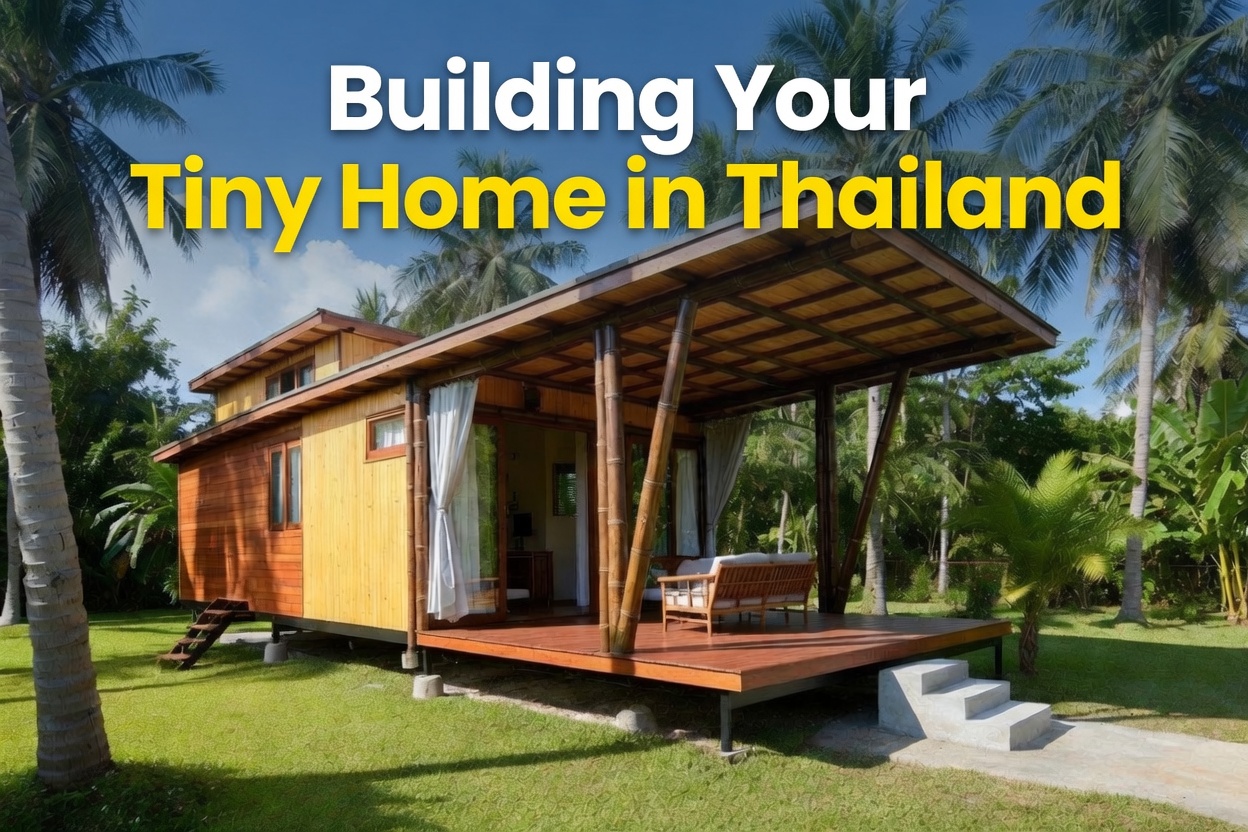
🛠️ From Dream to Blueprint: Building Your Tiny Home in Thailand
You’ve picked your location. You know the costs. You understand the legal landscape. Now comes the fun part — creating a home that’s uniquely yours.
But here’s the truth most blogs won’t tell you: building in Thailand’s tropical climate requires different thinking. The materials, ventilation, and foundation that work in California or Sweden? They’ll fail here. Fast.
This guide covers everything from choosing the right builder to selecting materials that laugh at humidity. Let’s build something extraordinary.
🏗️ Step 1: Choose Your Build Path
| Build Method | Best For | Cost Range (THB) | Timeline |
|---|---|---|---|
| 🏭 Full Prefab (Factory-Built) | Speed, budget control, first-time buyers | 250,000–1,500,000 | 2–6 weeks |
| 🔨 Hybrid (Prefab + On-Site) | Customization, mid-range budget | 800,000–2,500,000 | 1–3 months |
| ✏️ Custom Design (Architect-Led) | Unique vision, premium finishes | 1,500,000–5,000,000+ | 3–8 months |
| 🪵 Traditional Thai Craft | Heritage aesthetics, eco-conscious | 1,000,000–3,000,000 | 4–6 months |
💡 Pro Tip: Most first-time tiny home buyers in Thailand choose Hybrid. You get factory precision for walls and roof, plus on-site flexibility for layout and finishes. Best of both worlds.
🌡️ Step 2: Design for Thailand’s Tropical Climate
Thailand’s climate isn’t just “hot.” It’s hot + humid + monsoon + dust. Your tiny home needs to handle all four. Here’s how the pros do it:
☀️ Heat Management
- Cross-ventilation: Windows on opposite walls, minimum 2 directions
- High ceilings (3m+): Hot air rises, keeps living space cooler
- Reflective roofing: Metal with UV coating reduces heat absorption by 40%
- Insulated panels: PU foam core, not styrofoam — handles humidity better
- Elevated floor: 60cm+ gap allows air circulation, prevents flooding
💧 Humidity & Rain Defense
- Galvanized steel frames: Rust-resistant, termite-proof
- Fiber cement boards: Don’t swell or rot like MDF or plywood
- Waterproof membranes: Under roof and around foundation
- Proper drainage slope: 2-3% grade away from structure
- Dehumidifier-ready: Plan electrical for portable units
🦟 Pest & Wildlife Protection
- Stainless steel mesh: On all vents and gaps — rats chew through plastic
- Termite barriers: Chemical or physical (stainless steel mesh) at foundation
- Sealed food storage: Built-in cabinets with tight closures
- Mosquito screens: Magnetic or roller type for all openings
🧱 Step 3: Materials That Survive Thailand
| Material | Best Use | Cost/m² (THB) | Lifespan |
|---|---|---|---|
| 🏗️ Galvanized Steel Frame | Structure, roof trusses | 800–1,500 | 50+ years |
| 🧱 Fiber Cement Board | Walls, ceiling, cladding | 400–800 | 30+ years |
| 🔩 PU Insulated Panels | Roof, exterior walls | 1,200–2,000 | 25+ years |
| 🪵 Teak (Reclaimed) | Flooring, accents, deck | 2,500–5,000 | 40+ years |
| 🪟 uPVC Windows | All openings | 2,500–4,500 | 20+ years |
| 🌿 Bamboo Composite | Decking, fencing, feature walls | 600–1,200 | 15+ years |
⚠️ Avoid These Materials in Thailand: Regular MDF (swells), untreated wood (termites love it), standard steel (rusts in 2-3 years), single-pane glass (heat bomb). We’ve seen all four fail catastrophically.
👷 Step 4: Finding the Right Builder
Not all builders understand tiny homes. Many will try to sell you a “small house” instead — which is not the same thing. Here’s your vetting checklist:
| Question to Ask | 🟢 Good Answer |
|---|---|
| “How many tiny homes have you built?” | “Over 50 in the last 3 years” — specific, recent |
| “Can I visit a completed project?” | “Yes, we have 3 owners who welcome visitors” — transparency |
| “What’s your warranty?” | “5-year structural, 2-year systems” — written, not verbal |
| “Do you handle permits?” | “Yes, included in our service” — saves you weeks of bureaucracy |
| “What if I want changes mid-build?” | “We have a change-order process with fixed rates” — professionalism |
💡 Red Flag: If a builder says “we can start tomorrow” — run. Quality builders in Thailand have 3-6 month waitlists. Anyone instantly available is either new (risky) or desperate (worse).
📅 Step 5: Your Build Timeline
| Phase | What Happens | Duration |
|---|---|---|
| 📋 Weeks 1-2 | Design finalization, material selection, permit application | 2 weeks |
| 🏗️ Weeks 3-6 | Foundation, factory fabrication of prefab components | 4 weeks |
| 🔧 Weeks 7-10 | Delivery, assembly, electrical/plumbing installation | 4 weeks |
| 🎨 Weeks 11-12 | Interior finishing, painting, fixture installation | 2 weeks |
| ✅ Week 13 | Final inspection, snag list completion, handover | 1 week |
📌 Reality Check: Monsoon season (May-October) can add 2-4 weeks. Plan your build to start in November or February for smoothest progress.
✅ Your Action Plan: From Today to Move-In
- Month 1: Finalize design, select builder, sign contract, pay deposit (30%)
- Month 2: Builder submits permits, begins factory fabrication
- Month 3: Foundation poured on-site, utility connections arranged
- Month 4: Prefab delivery, assembly, systems installation
- Month 5: Interior finishing, final inspection, remaining payment (70%)
- Month 6: Move in, celebrate, start living your tiny paradise 🎉
🏡 Coming Next: Part 5 — Real stories from Thailand’s tiny home community. Meet the people who’ve actually done it.
📌 General Disclaimer
The information provided in this blog post is for educational and entertainment purposes only and does not constitute legal, financial, or real estate advice. Building regulations, material prices, and regulations in Thailand change frequently. Always consult with a qualified Thai architect, engineer, and licensed builder before making any construction decisions. Kan Homes and the author are not liable for any decisions made based on this content. This post may contain affiliate links.