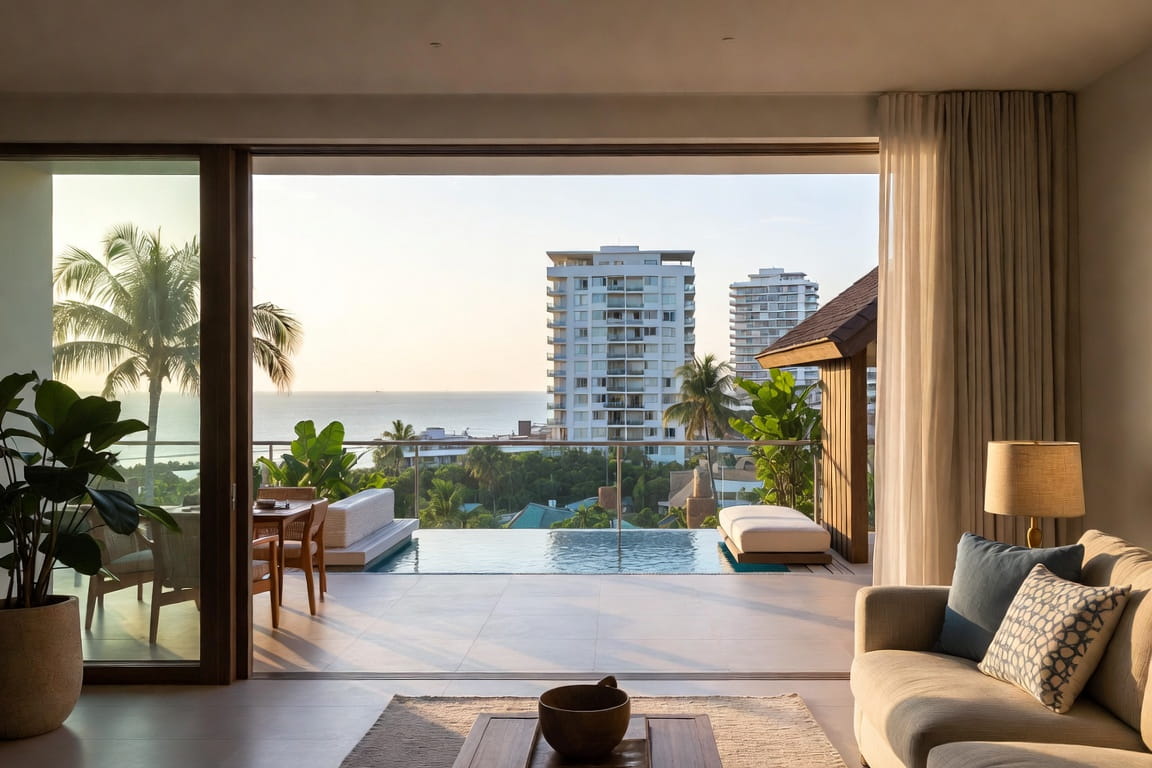
Thailand keeps pulling in foreign buyers — holidaymakers who fall for a beach town, remote workers eyeing a base, investors scouting yield. And the same question keeps coming up: can you actually buy property in Thailand while you’re just here on a tourist visa? The short answer is yes, for one property type — but “yes” comes with real conditions worth understanding before you transfer a single baht.
⚡ Quick answer
Your visa type does not stop you from buying a condominium in Thailand. What actually matters is the source of your funds, the property type (condo, not land), and whether the building still has foreign quota available. Land and villas are a different story — you can’t own the land itself, on any visa.
What Thai Law Actually Says About Foreign Ownership
Under Land Code Section 86, foreigners are prohibited from owning land in their own name — this isn’t a grey area open to interpretation, and violations can carry criminal penalties under Sections 111–113. That prohibition hasn’t moved heading into 2026, and there’s no realistic sign it will soon.
Condominiums sit outside that restriction entirely, which is why they’re the default recommendation for almost every foreign buyer. Beyond condos and leasehold, there’s one narrow exception: under Section 96 bis, a foreigner who invests a minimum of roughly 40 million THB into qualifying Thai assets can apply to own up to 1 rai of residential land. It’s rare and heavily conditioned — most buyers will never use it — but it’s the one genuine path to land ownership that exists.
🏢 Condominiums: the straightforward route
Under the Condominium Act, foreigners can hold full freehold title to a condo unit — your name goes directly on the Chanote (Nor Sor 4 Jor) title deed, the most secure title class in Thailand. The catch is the foreign quota: foreign ownership across any single project can’t exceed 49% of total saleable floor area. Popular projects in Phuket, Pattaya, and Bangkok frequently sell out their quota, so it’s worth confirming availability before you fall in love with a unit.
- ✅ Full freehold ownership, name on the Chanote
- ✅ No visa requirement to purchase or hold the unit
- ✅ Funds must arrive from abroad in foreign currency
- ✅ Bank confirmation required — a formal FET form for larger transfers (see below)
🏡 Land and villas: more complex territory
You cannot own the land under a house or villa. The usual workaround is separating ownership — you can own the building itself while leasing the land underneath, typically for up to 30 years. Some buyers instead set up a Thai Limited Company to hold the land, but this route demands real legal structuring and genuine Thai shareholding — not a shell arrangement.
⚠️ Two things changed since the last time this topic made the rounds:
A Thai Supreme Court ruling in March 2025 struck down stacked lease-renewal clauses (the “30+30+30” structure marketed by some developers) as unenforceable. Only the first registered 30-year term is a real, protected right — anything beyond that is a contractual promise the landlord (or their heirs, or a new owner) is not legally bound to honour.
Separately, Thai authorities have been running an active enforcement crackdown on nominee company structures — reviewing tens of thousands of Thai companies suspected of holding land on a foreigner’s behalf. Nominee arrangements have always been illegal; they’re now actively being investigated, not just theoretically risky.
So — Can You Legally Buy on a Tourist Visa?
Yes, for a condo. Purchasing property is a civil transaction handled by the Land Department — not an immigration matter. Plenty of buyers complete condo purchases on a Tourist Visa (TR) or a Visa Exemption entry stamp. Immigration status determines how long you can stay in the country; it has no bearing on whether the Land Department will register a condo title in your name.
What you actually need to get the deal done
- Funds transferred into Thailand from an overseas account, in foreign currency
- The transferred amount matching or exceeding the purchase price
- Proper bank documentation referencing “purchase of condominium” as the transfer purpose
- Those records kept intact for the Land Office transfer appointment
On the FET form specifically: Thai banks generally only issue a formal Foreign Exchange Transaction (FET) form for inward transfers over USD 50,000. Below that threshold, a bank-issued credit confirmation letter is usually sufficient for Land Office registration. Ask your receiving bank which document applies to your transfer size before you assume you need the full FET.
💡 Tip: Open a Thai bank account before you need one. Some banks want a non-immigrant visa; others will work with tourists, particularly at branches used to foreign buyers. Sort this out early with both the bank and your lawyer — it removes a bottleneck at the worst possible moment.
Buying in 2026: What’s Actually Changed
You’ll see plenty of marketing referencing “upcoming” reforms. Here’s where they actually stand:
| Proposal | Status as of 2026 |
|---|---|
| 99-year leasehold (replacing the 30-year cap) | Still a draft. Repeatedly stalled at committee stage. Not law. |
| Raising the condo foreign quota to 75% (or 60–70% in resort zones) | Proposal only. The 49% cap remains in force nationwide. |
| OCPB off-plan deposit protections | Enacted — new consumer-protection rules now shield off-plan condo buyers from unfair deposit forfeiture. |
| Nominee company enforcement | Active — ongoing investigations targeting suspected nominee land-holding structures. |
If a developer or agent is marketing a “99-year lease” or advertising units as though the 75% quota already applies, treat that as a red flag, not a selling point. Price and structure your deal around the law as it stands today.
Costs to Budget Beyond the Sticker Price
- 📍 Transfer fee — split or negotiated between buyer and seller
- 📍 Specific Business Tax or Stamp Duty — depends on how long the seller held the property
- 📍 Withholding tax — technically the seller’s obligation, sometimes negotiated into the price
- 📍 Independent legal fees
- 📍 Sinking fund and ongoing common-area maintenance fees
Confirm exact rates with your lawyer or the Land Department at the time of purchase — these are administrative rates that shift periodically.
Do You Actually Need a Lawyer?
Yes. Not the developer’s in-house lawyer, not the agent’s recommended contact who’s paid a referral fee — an independent Thai property lawyer working for you. They’ll verify the title is clean, confirm the foreign quota actually has room left, check the developer’s licensing, and walk the transfer through the Land Department properly.
FAQs
Can I buy a house or villa in Thailand as a foreigner?
Not the land underneath it. You can own the structure separately, or lease the land for up to 30 years (renewals are contractual, not guaranteed). A properly structured Thai company is a third option — but it must involve genuine Thai ownership, not a nominee, given the current enforcement climate.
Does my visa type affect my ability to buy property?
Not for condo eligibility — that’s governed by property law and your funding source, not immigration status. A non-immigrant visa can make opening a Thai bank account easier, but it isn’t a legal requirement to buy.
What is the foreign quota, and is it changing?
Currently 49% of a condo building’s total saleable floor area. Proposals to raise it to 75% (or 60–70% in resort zones) have been discussed but not passed — the 49% cap is still what applies. Always confirm remaining quota on a specific project; popular buildings do sell out.
Do I really need the FET form for every purchase?
Only for larger transfers — banks typically issue a formal FET for inward remittances over USD 50,000. Below that, a standard bank credit confirmation letter is usually enough for Land Office registration. Confirm with your specific bank.
Is a 99-year lease actually available in 2026?
No. It remains a draft proposal that has stalled repeatedly. The enforceable maximum is still a 30-year registered lease. Be wary of any marketing that implies otherwise.
This article is general information, not legal, financial, or investment advice. Thai property law and enforcement practices change; confirm current rules with a licensed Thai property lawyer and, where relevant, the Land Department before making any purchase decision.