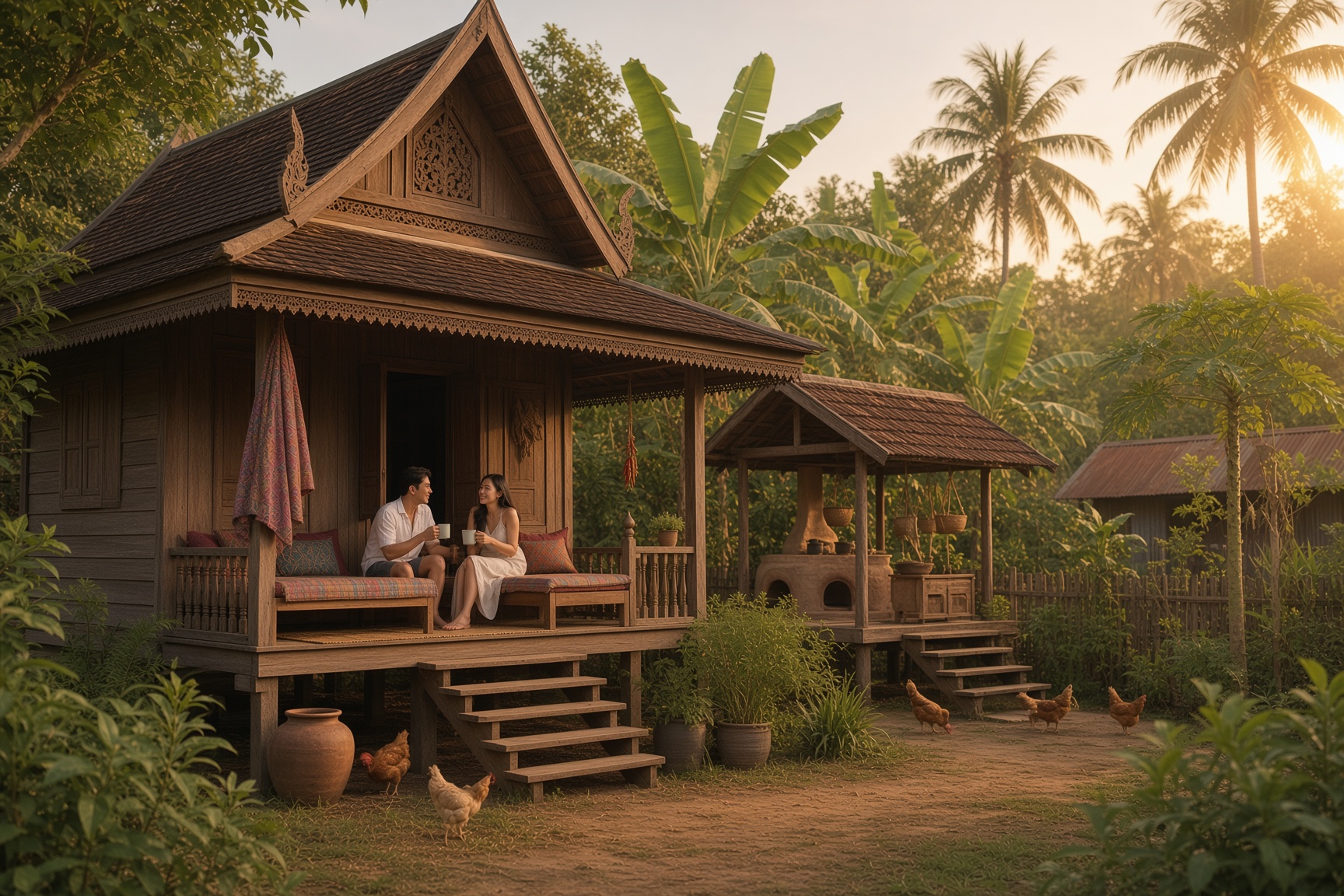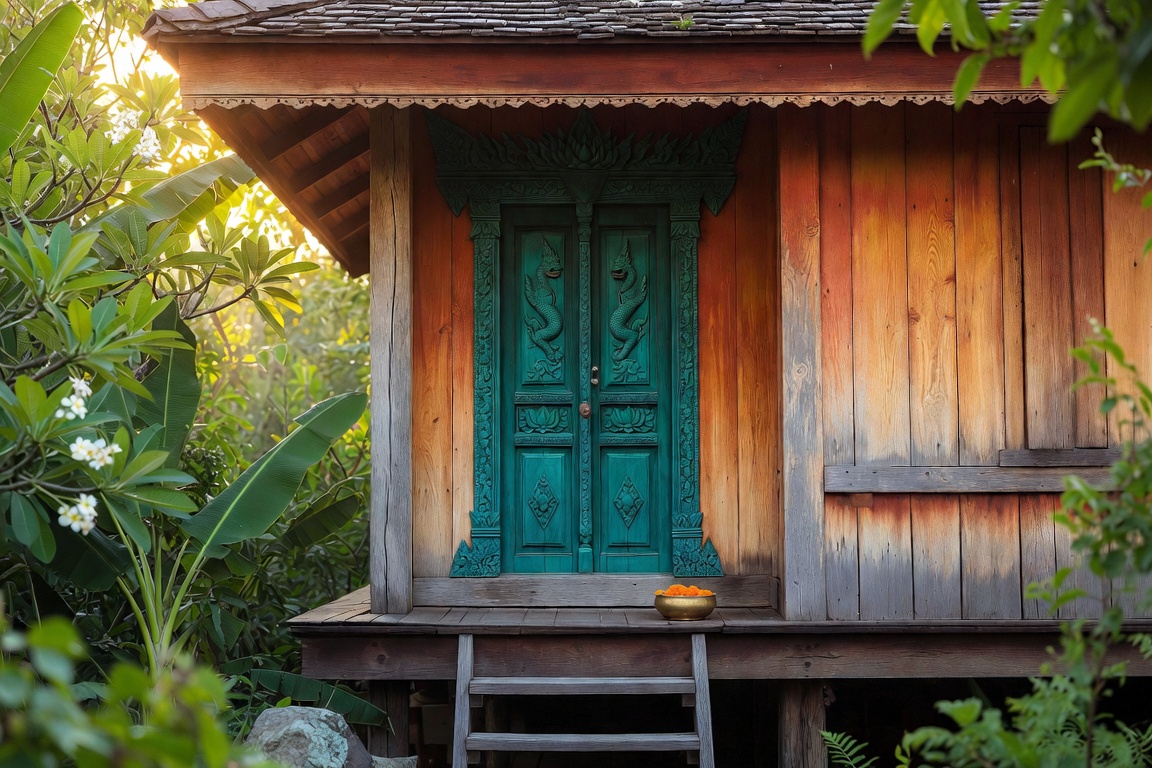
Thai house colors are never just a paint chip decision — they’re a quiet conversation with luck, status, and centuries of belief. Drive through any Thai neighborhood, from a breezy beach town in Krabi to a leafy soi in Chiang Mai, and you’ll notice something: house colors rarely feel random. That soft yellow gate. That deep red front door. That surprisingly specific shade of cream on a spirit house. None of it is accidental.
For foreign buyers, this is one of those delightful rabbit holes nobody warns you about. Thai color symbolism touches everything — front doors, gates, even which day of the week you should start painting. Get it right, and you’re not just building a house. You’re building good fortune into the walls.
🎨 Quick Insight: Many Thai builders and renovation crews will ask about your birth day of the week before finalizing exterior paint colors — a tradition rooted in Thai astrology that still shapes real design decisions today.
Why Thai House Colors Carry So Much Meaning
Thailand’s color symbolism blends several traditions at once — Thai-Buddhist astrology, Chinese feng shui (especially strong among Thai-Chinese communities), and old-fashioned regional superstition. The result is a color system that’s part spiritual, part practical, and completely fascinating.
At the center of it all is an idea familiar to many Thais from childhood: every day of the week has its own color, tied to a planetary deity. Your birth day supposedly influences which colors bring you luck — and which ones quietly work against you.
The Day-of-Week Color Wheel
Simple chart idea: a color wheel graphic with each day’s color as a segment, labeled with its planetary deity — instantly shareable and a favorite on Pinterest-style platforms.
Many Thai homeowners choose their front door or main gate color based on their birth day, believing it channels personal luck straight into the household. Some go further, matching the color of their car, wallet, or even underwear to their lucky day — yes, really.
What Front Door Colors Actually Signal in Thailand
The front door is considered the “mouth” of the house — where energy, luck, and fortune enter. So its color isn’t chosen lightly.
Here’s a fun twist: red doors are wildly popular among Thai-Chinese families for the same reasons red envelopes appear at Chinese New Year — the color is considered a magnet for good fortune. Meanwhile, more rural, Thai-Buddhist households often lean toward earthy greens and warm golds, colors associated with the natural world and temple architecture.
Colors Thai Homeowners Tend to Avoid (and Why)
Just as some colors attract luck, others are believed to quietly repel it. This is where things get genuinely interesting for foreign buyers eyeing a renovation.
- All-white exteriors — traditionally associated with mourning and funerals in Thai culture; increasingly common in modern design, but still gives some older Thais pause.
- Pure black gates — seen by some as too heavy or somber for a main entrance, though popular in ultra-modern minimalist builds.
- Grey tones — considered by some to feel “lifeless” or unlucky, associated with ash and dullness rather than vibrancy.
- Colors clashing with your birth day — less about the shade itself and more about the mismatch with your personal lucky color.
🌿 Local Tip: If you’re unsure, ask your Thai contractor or neighbor for their honest opinion on color choices before finalizing paint. Most are happy to share insight, and it’s a wonderful way to build goodwill with the local community.
Chinese-Thai Influence vs. Traditional Thai-Buddhist Style
Thailand’s color beliefs aren’t one single tradition — they’re a blend, shaped heavily by the country’s large and influential Thai-Chinese population alongside native Thai-Buddhist customs.
| Tradition | Favored Colors | Typical Setting |
|---|---|---|
| Thai-Chinese (feng shui influenced) | Red, gold, deep green | Urban shophouses, business properties, Bangkok townhomes |
| Thai-Buddhist | Saffron orange, cream, soft gold | Rural homes, temple-adjacent properties |
| Modern Coastal Thai | Teal, sandy cream, terracotta | Phuket, Hua Hin, and beach-town developments |
This blending is part of what makes Thai residential design so visually rich. Walk through Bangkok’s older neighborhoods and you’ll spot deep red Chinese-influenced shophouse facades sitting comfortably beside cream-colored Thai-Buddhist homes with gold trim — two traditions, one shared belief that color shapes fortune.
Blending Tradition with Modern Design
The good news for design-conscious buyers? You don’t have to choose between “traditional and lucky” or “modern and stylish.” Thai architects and interior designers are increasingly skilled at weaving auspicious color choices into sleek, contemporary builds.
- Use your lucky day-color as an accent — a front door, a feature wall, or trim — rather than the entire exterior.
- Pair traditional gold or red accents with neutral modern tones like cream or soft grey for balance.
- Coastal properties often blend teal and terracotta beautifully, nodding to tradition while feeling fresh and current.
- Ask your designer to incorporate auspicious colors into interior elements — a red-accented entryway or gold-toned lighting fixtures — if a full exterior commitment feels like too much.
Quick Color Checklist Before You Paint
- Learn your birth day of the week and its associated lucky color.
- Ask a local contractor or neighbor for honest color feedback before finalizing.
- Consider blending tradition (accent colors) with modern design (neutral base tones).
- Avoid full all-white or all-grey exteriors if you want to stay culturally aligned.
- Remember: this is about respect and connection, not rigid rules — most Thais are relaxed and welcoming about foreigners embracing the tradition imperfectly.
The Real Takeaway: Color Is Part of the Story
Thai house colors are so much more than aesthetics — they’re a visible thread connecting a home to centuries of belief, community, and personal identity. For foreign buyers, understanding this layer of design turns a simple renovation decision into a meaningful cultural conversation.
You don’t need to repaint your entire house gold to show respect for the tradition. Even a thoughtfully chosen front door color, discussed openly with local neighbors or contractors, sends a powerful signal: this is someone who cares about doing things the right way.
Planning a renovation or building a new home in Thailand? The KAN Homes team can connect buyers with trusted local contractors who understand both the design and the deeper meaning behind every color choice — helping create a home that looks beautiful and feels genuinely fortunate.
Disclaimer: This article is provided for general informational and educational purposes only and does not constitute legal, financial, or professional design advice. Color beliefs and traditions can vary by region, family, and personal practice. Readers should consult local designers, contractors, or community members for guidance specific to their situation.