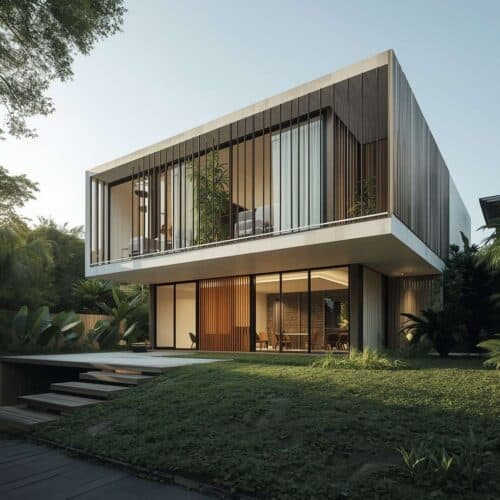
For decades, the value of a home in Thailand was measured by its proximity to the BTS station or the shopping mall. However, as we approach 2026, a profound shift is occurring. At Kan Homes, we are observing the emergence of the “Phygital Sanctuary.” Consequently, the future of living in Thailand for 2026 is being redefined by human optimisation rather than just postcodes.
The traditional real estate model is currently being dismantled. Today, a new class of global inhabitants views property as a high-performance node for a borderless life. Here is our predictive look at the invisible architecture shaping the market.
1. The Decline of ‘Postal Code’ Prestige
In the past, prestige was tied to addresses like Thong Lo or Wireless Road. However, in 2026, the question “Where do you live?” is being replaced by “How do you live?”. Many elite buyers are now choosing “Desynchronised Locations.”
For instance, areas like the lush fringes of Lat Krabang are becoming highly desirable. This is because the digital infrastructure—such as 6G and satellite redundancy—is often superior to the physical congestion of the old city centre. Therefore, the future of living in Thailand 2026 is about connectivity over centralisation.
2. Architecture as a Biological Interface
The most insightful trend of 2026 is the home functioning as a health utility. We predict that the “Smart Home” label will soon be considered primitive. Instead, the market is moving toward Biophilic Integration. This includes:
- AI Air Regulation: Systems that adjust oxygen levels based on your wearable health data.
- Circadian Lighting: Indoor lights that mimic natural sun cycles to improve sleep.
- Acoustic Isolation: Studio-grade soundproofing as a standard residential feature.
For the investor, this means a property is no longer just bricks and mortar; it is a piece of biotech. A home that reduces cortisol levels is a non-negotiable asset with zero vacancy risk.
3. The ‘Third Space’ Moves Indoors
Historically, the “Third Space” was a local café or a co-working hub. Recently, however, that space has moved into the residential floor plan. Data shows that successful new builds in Bangkok are replacing “Guest Bedrooms” with “Content Studios” or “Bio-Hacking Suites.”
The 2026 buyer is often a creator or a remote CEO. They require a sanctuary that facilitates deep work. As a result, real estate is becoming a tool for cognitive performance. If a property does not offer these features, it may quickly become obsolete in a competitive market.
4. Predictive Ownership: Fluid and Fractional
Perhaps the most thought-provoking shift is the move from “Ownership” to “Access.” We predict the rise of networked living. Imagine owning a fraction of a villa in Phuket and a studio in Lat Krabang, with the ability to rotate between them via blockchain-backed memberships.
Because Thailand offers flexible visa structures, it is becoming the global testing ground for this “Fluid Real Estate” model. This is a primary driver for the future of living in Thailand 2026.
Invest in the Future with Kan Homes
At Kan Homes, we do not just sell square metres; we curate environments for a high-performance life. The 2026 market belongs to those who understand that a home is now an operating system.